

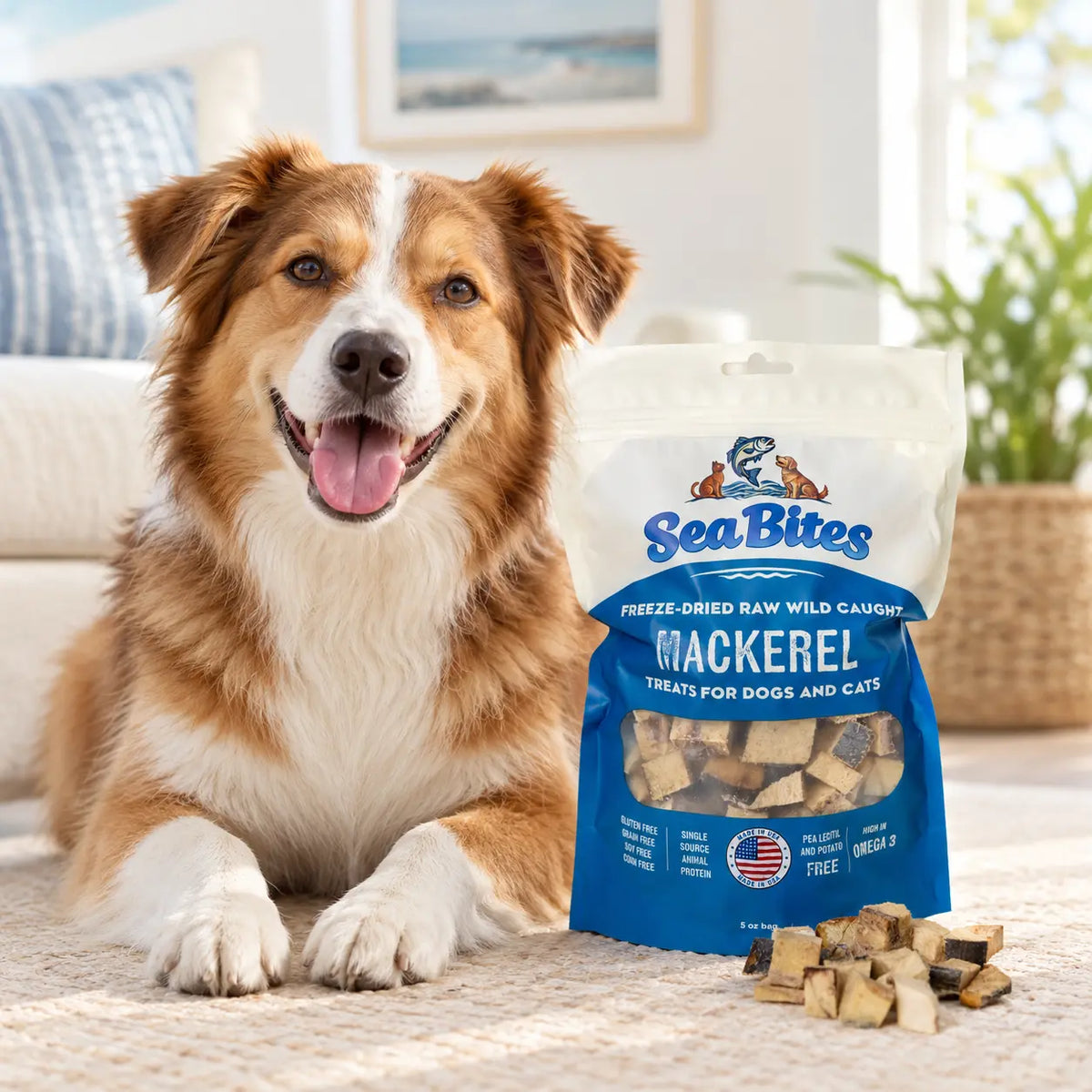
Freeze-Dried Mackerel Dog Treats - 5 oz
One ingredient. Wild-caught. Made in the USA.
No grains, no glycerin, no preservatives, no colours, no flavourings.
One ingredient: wild-caught Atlantic mackerel
The complete ingredient list is one word. There are no grains, no glycerin, no binders, no preservatives, no flavourings and no colours in this product. Freeze-dried whole fish requires none of them. Every other single-ingredient product in the range is at single ingredient dog treats.
Why is mackerel high in omega-3?
Atlantic mackerel is an oily fish that stores fat throughout its muscle tissue rather than only in the liver, which is why it carries substantially more EPA and DHA than white fish. Freeze-drying concentrates this further by removing water, producing 6.5 g of omega-3 per 100 g in the finished treat.
What omega-3 does and does not do is worth stating plainly. EPA and DHA support skin barrier function and moderate inflammatory signalling. They are not a treatment for allergies and will not cure one. Owners who observe a coat change typically report it around week six to eight, because that is how long the fatty acids take to be incorporated into cell membranes. For dogs with skin concerns, see dog treats for allergies.
Which mackerel is this, and does mercury matter?
This product uses Atlantic mackerel, which FDA testing places at an average of 0.05 ppm mercury - inside the FDA "Best Choices" category for frequent consumption. King mackerel is a separate species averaging approximately 0.73 ppm, fifteen times higher, and is on the FDA "Choices to Avoid" list. It is never used in Sea Bites Treats products.
The FDA action level, at which a product is removed from sale, is 1.0 ppm. Atlantic mackerel sits twenty times below it.
Why freeze-dried rather than dehydrated?
Freeze-drying is a cold vacuum process: the fish is frozen and the ice is drawn off as vapour without ever melting. Dehydrating uses warm air over several hours. Heat degrades the omega-3 fatty acids that make oily fish worth feeding, so freeze-drying retains more of the nutrition.
Nothing is fried and no oil is added at any stage, which means the fat content of the finished treat is whatever the fish contained and nothing more. A fuller comparison is at freeze-dried versus baked dog treats.
How many mackerel treats can my dog have?
Keep treats under 10% of daily calories. At approximately 11 calories per piece, a 10 kg (22 lb) dog can have about five pieces per day and a 30 kg (66 lb) dog about twelve. Subtract treat calories from the daily food measure rather than adding them on top.
| Dog weight | Daily treat budget | Mackerel pieces per day |
|---|---|---|
| 5 kg / 11 lb | 35 kcal | 3 pieces |
| 20 kg / 44 lb | 100 kcal | 9 pieces |
| 30 kg / 66 lb | 135 kcal | 12 pieces |
| 40 kg / 88 lb | 167 kcal | 15 pieces |
Mackerel is the richest of the three Sea Bites Treats fish at 20% fat. For a dog with an unsettled stomach, start with tuna or bonito and introduce mackerel later.
How should these be stored?
No refrigeration is needed. Keep the bag sealed and store it cool, dry and out of direct sunlight. Freeze-dried fish is shelf-stable because the moisture has been removed, so humidity is the only factor that affects it.